Paris
Paris is the city where Jean-Baptiste Clamence lived and worked as a successful lawyer before his fall, and it remains the geographical and psychological origin of the crisis that defines his entire confession. It is the stage for his former life of professional triumph, social ease, and moral complacency, and the location of the two traumatic events—the laugh on the Pont des Arts and the drowning of a young woman on the Pont Royal—that together dismantled his self-satisfied identity and drove him into self-imposed exile in Amsterdam. In Clamence's narrative, Paris functions as a lost world of light, height, and illusion, a magnificent stage-setting inhabited by four million silhouettes, a real trompe-l'œil that he has left behind but never forgotten, for the heart has its own memory.
Identity and Background
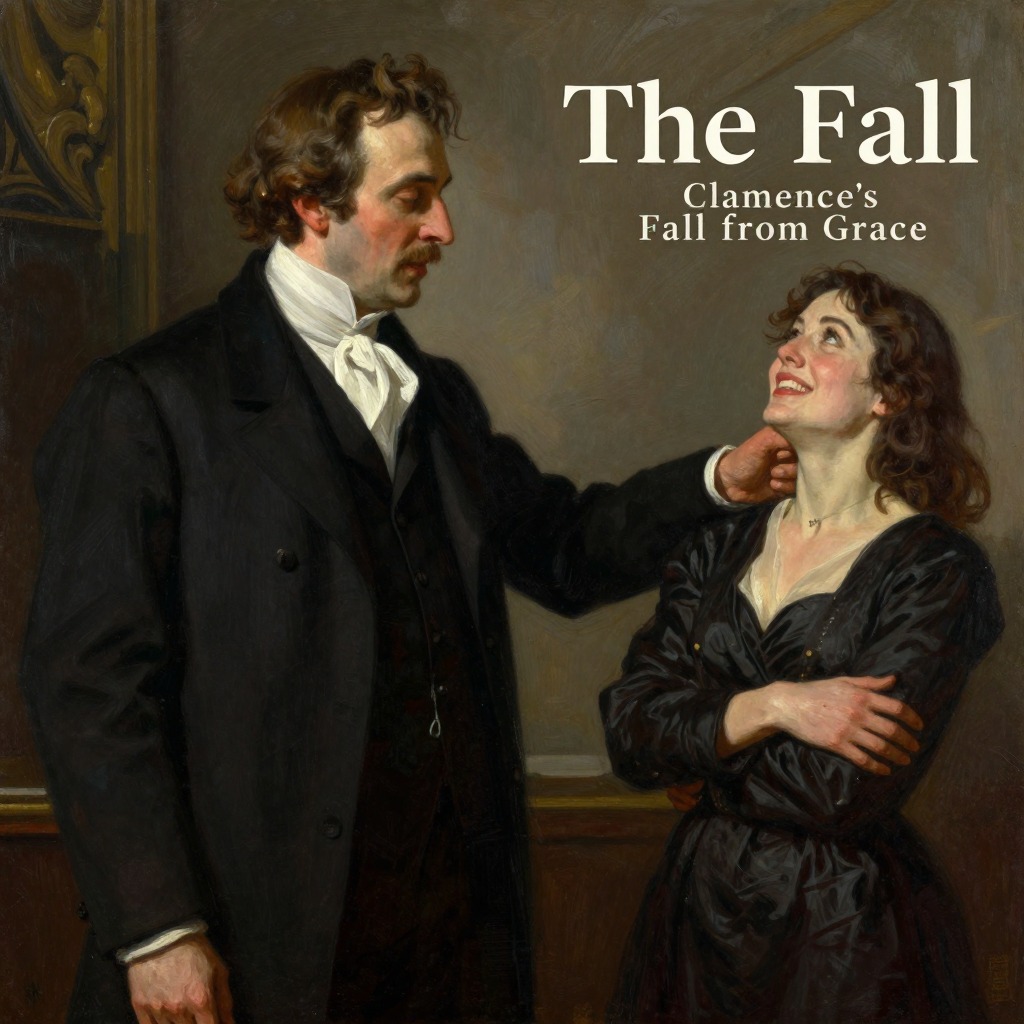
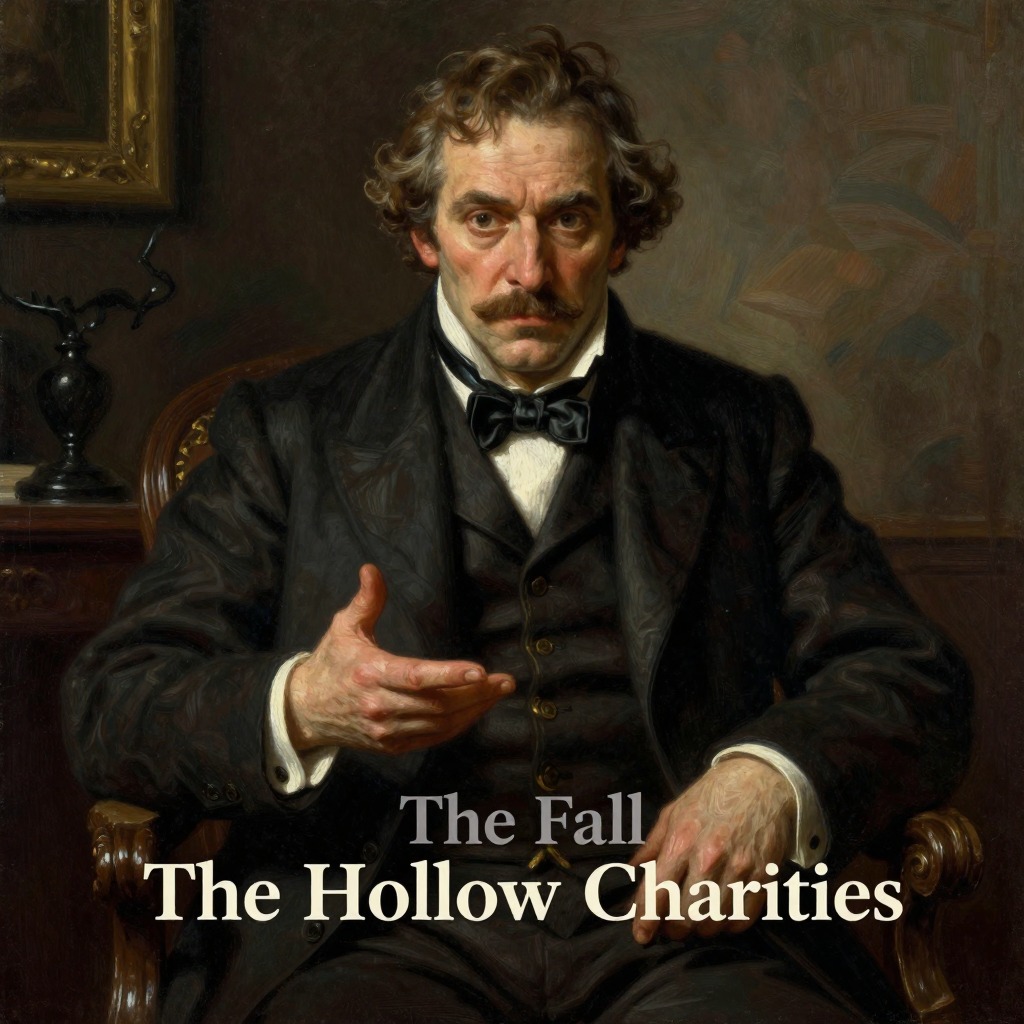
Clamence was a well-known lawyer in Paris, specializing in noble cases—widows and orphans, as the saying goes—and he conducted his professional life with a sense of being above reproach. He never accepted a bribe, never stooped to shady proceedings, and refused the Legion of Honor two or three times with a discreet dignity. He enjoyed his own nature to the fullest, finding happiness in his own excellence, and he felt himself to be in harmony with life, fitting into it from top to bottom. He was a man of the heights, preferring the bus to the subway, open carriages to taxis, terraces to closed-in places, and he felt comfortable only in lofty places, a natural balcony fifteen hundred feet above a sea still visible bathed in sunlight being the place where he could breathe most freely. His profession satisfied that vocation for summits, setting him above the judge whom he judged in turn and above the defendant whom he forced to gratitude, allowing him to live with impunity, concerned in no judgment, somewhere in the flies like those gods that are brought down by machinery from time to time to transfigure the action.
The Pivotal Evening on the Pont des Arts
The decisive moment of Clamence's undoing occurred on a fine autumn evening in Paris, still warm in town and already damp over the Seine. He was walking up the quays of the Left Bank toward the Pont des Arts, treading on dusty yellow leaves that still recalled summer, enjoying the return of silence, the evening's mildness, the emptiness of Paris. He was happy: the day had been good, including a blind man, a reduced sentence he had hoped for, a cordial handclasp from his client, a few liberalities, and in the afternoon, a brilliant improvisation with several friends on the hardheartedness of the governing class. On the deserted Pont des Arts, facing the statue of the Vert-Galant, he felt rising within him a vast feeling of power and of completion, and he straightened up to light a cigarette of satisfaction. At that very moment, a laugh burst out behind him. Taken by surprise, he wheeled around; there was no one there. He heard the laughter again, a good, hearty, almost friendly laugh, coming from nowhere unless from the water. His heart beat rapidly, and he was dazed, having trouble breathing. That evening he rang up a friend who wasn't at home, and later, when he heard laughter under his windows, he opened them to find only some youths loudly saying good night. In the bathroom, his reflection was smiling in the mirror, but it seemed to him that his smile was double. After this, he ceased to walk along the Paris quays; when he rode along them in a car or bus, a sort of silence would descend on him, and he was waiting, but he would cross the Seine, nothing would happen, and he would breathe again.
The Earlier Drowning on the Pont Royal
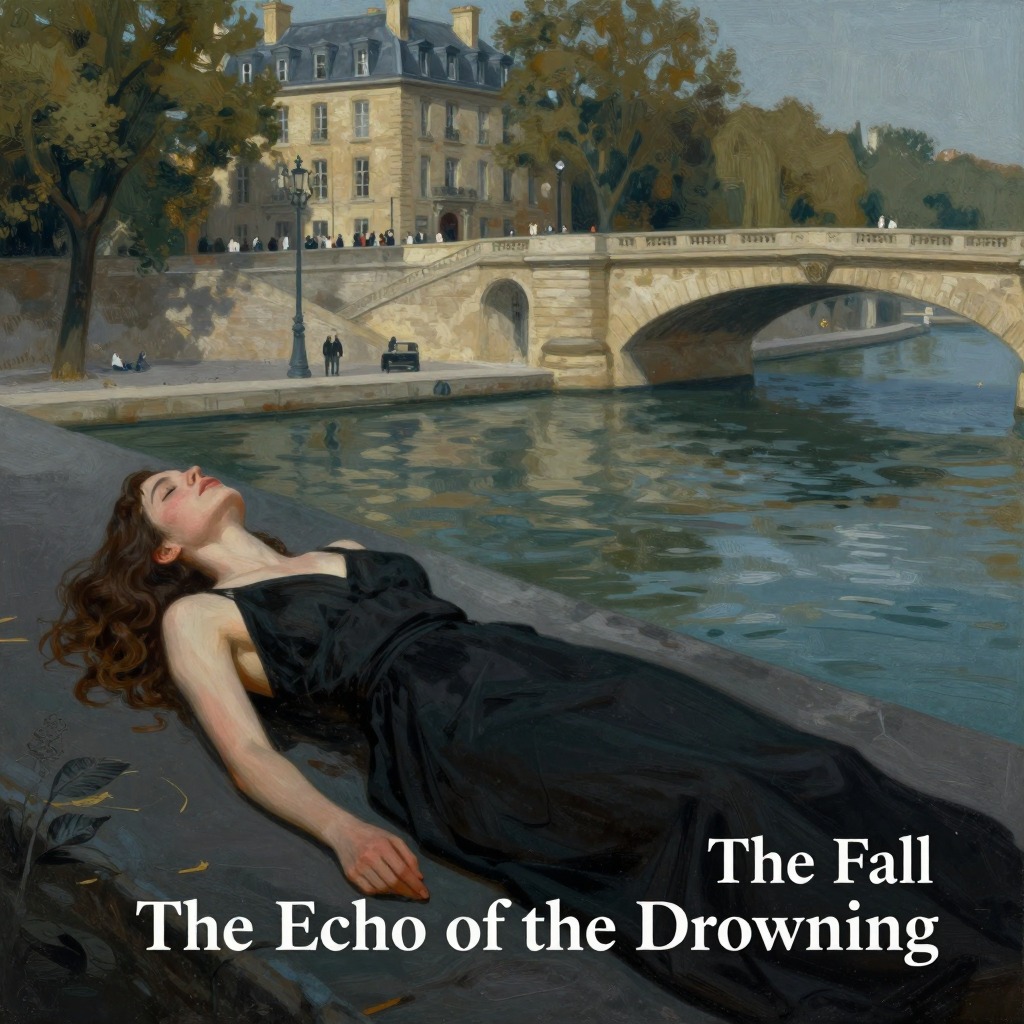
Two or three years before the laugh on the Pont des Arts, on a particular night in November, Clamence was returning to the Left Bank and his home by way of the Pont Royal, an hour past midnight, with a fine rain falling. He had just left a mistress, who was surely already asleep, and he was enjoying the walk, his body calmed and irrigated by a flow of blood gentle as the falling rain. On the bridge he passed behind a figure leaning over the railing, a slim young woman dressed in black, whose cool and damp neck between her dark hair and coat collar stirred him, but he went on after a moment's hesitation. At the end of the bridge he followed the quays toward Saint-Michel, where he lived, and after he had gone some fifty yards he heard the sound of a body striking the water, dreadfully loud in the midnight silence. He stopped short but without turning around. Almost at once he heard a cry, repeated several times, going downstream, then suddenly ceasing. The silence that followed seemed interminable. He wanted to run and yet didn't stir, trembling from cold and shock, feeling an irresistible weakness steal over him. He told himself that he had to be quick, but he thought, "Too late, too far..." or something of the sort. He stood motionless, listening, then slowly, under the rain, he went away. He informed no one. The next day and the days following, he did not read the papers. This cry, which had sounded over the Seine behind him years before, never ceased; it was carried by the river to the waters of the Channel, to travel throughout the world, across the limitless expanse of the ocean, and it waited for him there until the day he encountered it again on an ocean liner, when he perceived a black speck on the steel-gray ocean and thought at once of a drowning person, realizing that the cry had never stopped.
Consequences and Aftermath
After the laugh on the Pont des Arts, Clamence's life in Paris began to unravel. He had some health problems, a dejection, a sort of difficulty in recovering his good spirits, and life became less easy for him. He felt that he was half unlearning what he had never learned and yet knew so well—how to live. He discovered that he was always bursting with vanity, that "I, I, I" was the refrain of his whole life, and that he had lived on the surface of life, in the realm of words, never in reality. The thought of death burst into his daily life, and he was tormented by the thought that he might not have time to accomplish his task, a ridiculous fear that one could not die without having confessed all one's lies. He began to act out, jostling the blind in his thoughts, writing an "Ode to the Police" and an "Apotheosis of the Guillotine," and forcing himself to visit cafés where professional humanitarian freethinkers gathered to let fly forbidden expressions like "Thank God." His reputation was seriously damaged by his flights of language, and his clients became scarce. Eventually, he closed his law office, left Paris, and traveled, finally setting up his practice as a judge-penitent in Amsterdam, a capital of waters and fogs, girdled by canals. He has not forgotten Paris, however; he remembers its twilights at about the same season, when evening falls, dry and rustling, over the roofs blue with smoke, the city rumbles, the river seems to flow backward, and he used to wander in the streets. He knows that others wander now too, pretending to hasten toward the tired wife, the forbidding home.
Thematic Significance
Paris in Clamence's narrative is the antithesis of Amsterdam. It is the city of light, height, and the illusion of innocence, where he could dominate the island from the Pont des Arts and feel a vast feeling of power and completion. It is the world of the successful life, where he was in harmony with life, fitting into it from top to bottom, and where he felt like a superman. But it is also the city where the fundamental duplicity of the human being was revealed to him, where the laugh shattered his Eden, and where the cry of the drowning woman became the bitter water of his baptism. Paris represents the past he has fled but cannot escape, the judgment he fears, and the scene of the crime—the failure to act—that defines his guilt. His departure from Paris is an attempt to dodge judgment, but the city's memory, and the cry that travels with him, ensures that he is never free of it.